
CUBA TOBACCO ROAD
Van Urfalian
Two hours west of Havana, in Pinar del Río province, the Viñales Valley is a landscape unlike any other in Cuba: farmland broken by mogotes, steep limestone hills that rise like islands from the valley floor, some as tall as 300 meters. In 1999 UNESCO designated the valley a World Heritage cultural landscape, in large part because of what happens on that floor — tobacco farming that has survived largely unchanged for centuries, still worked with animal traction because machines can compromise the quality of the leaf. The harvest is hung to dry in thatched barns for months, then sold under a system built on limits: farmers sell most of their crop to the state at a set price and are left a smaller share to sell on their own. It is craft shaped by patience and by constraint in equal measure.
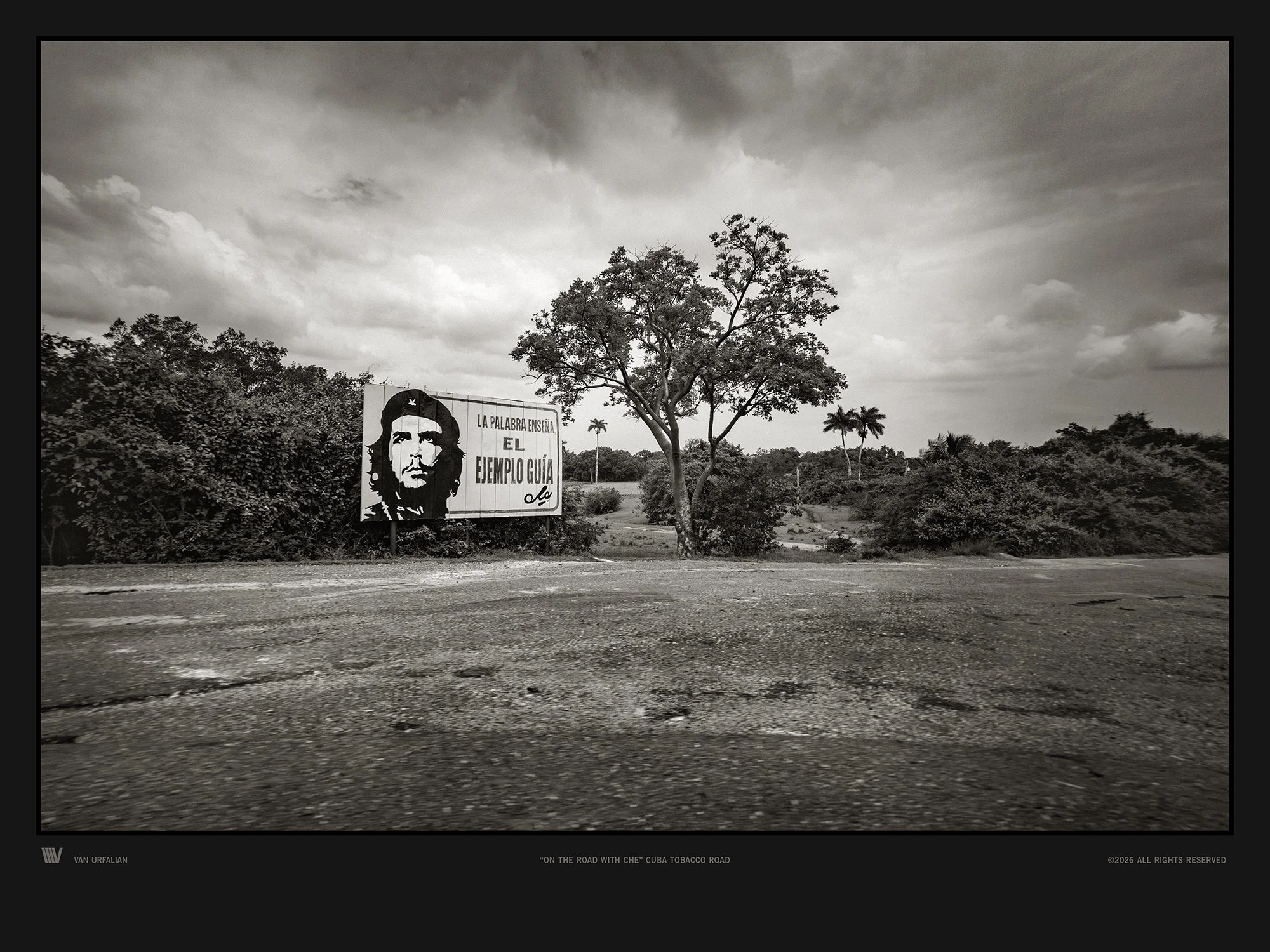
Cuba Tobacco Road follows that valley through ten photographs. A farmer sits in the shade of his drying barn among hanging tobacco leaves. A thatched barn stands among banana trees at the end of a dirt path. A white horse waits beneath a tree, a vintage American car with peeling paint rests under the palms, and cattle graze beside an empty road. Behind it all the mogotes keep their distance, and in one frame a roadside billboard, Che Guevara's portrait beside the words "the word teaches, example guides," reminds the viewer which country this is. Where Havana Summer 2015 caught a city at a moment of change, these photographs are about what persists when change is slow to arrive — a place, a craft, and a way of working that have been built within limits and refined by them. Made in black and white, the work is observational rather than journalistic, patient with the light, the land, and the people who work it.
Van Urfalian grew up in Los Angeles and graduated from ArtCenter College of Design's photography program in 1999. He has worked as a photographer, cinematographer, and creative director for entertainment studios and global brands, building his career around the idea that a picture's job is to tell a story. Cuba Tobacco Road is the second showing of his Cuba work, following Havana Summer 2015, and like it, a step toward a book gathering the full series — the same instinct for composition and narrative applied without a client or brief, and the same fascination with what people make of what they are given.
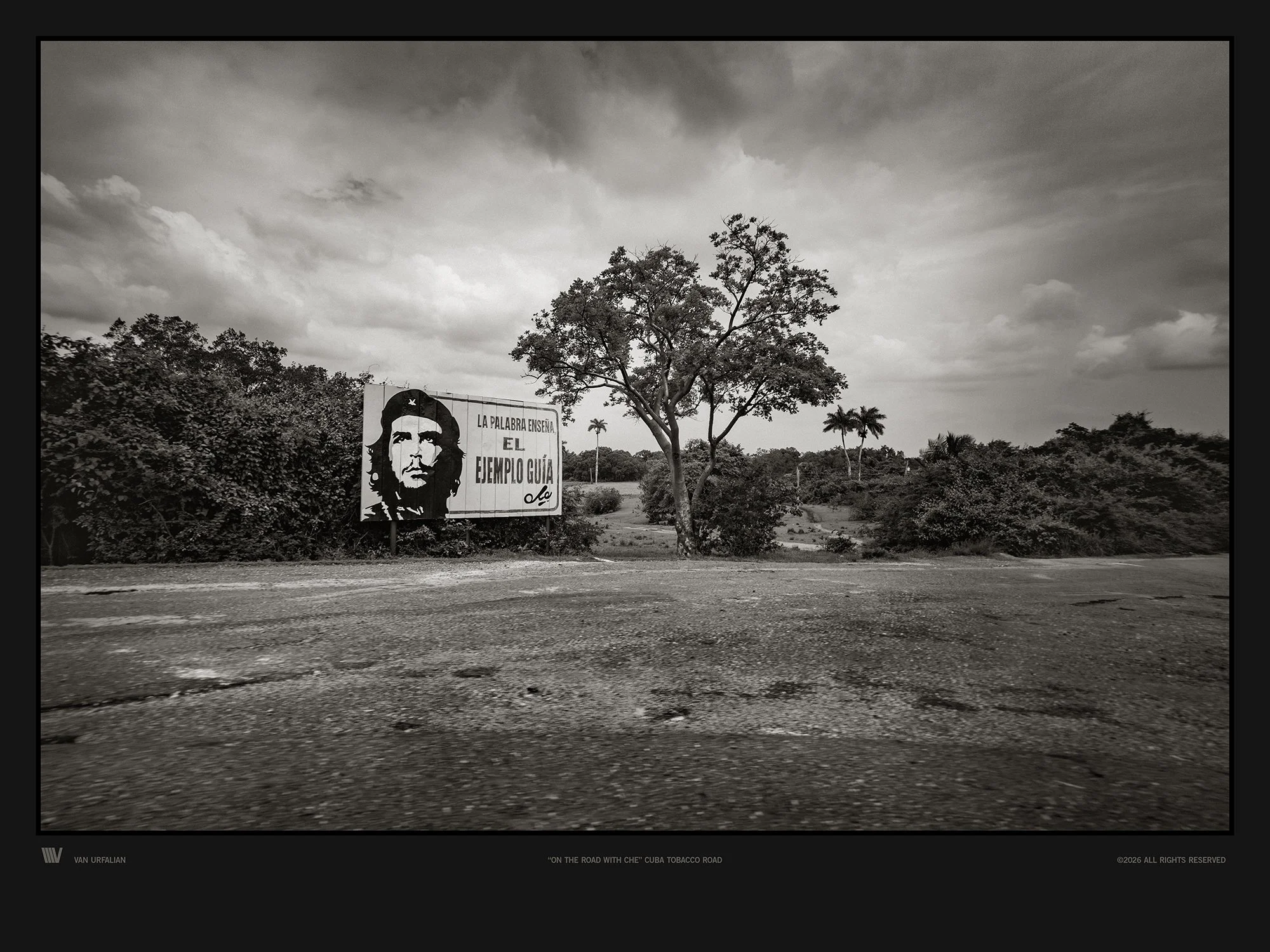
On the Road with Che
A painted billboard stands in a clearing, Che Guevara's stenciled portrait beside the words "La palabra enseña, el ejemplo guía" — the word teaches, example guides. Cuba has almost no commercial advertising; along its roads, billboards carry the Revolution's heroes and slogans instead. Out here, among fields worked by hand, there are few people to read it and no products to sell, and the line lands differently. In a valley where the work is learned by doing, it reads almost as a description of the farming as much as a slogan.
TITLE: On the Road with Che (June, 2015)
MEDIUM: Archival Giclée on canvas
DIMENSIONS: 24 X 16”
PRICE: $3,750
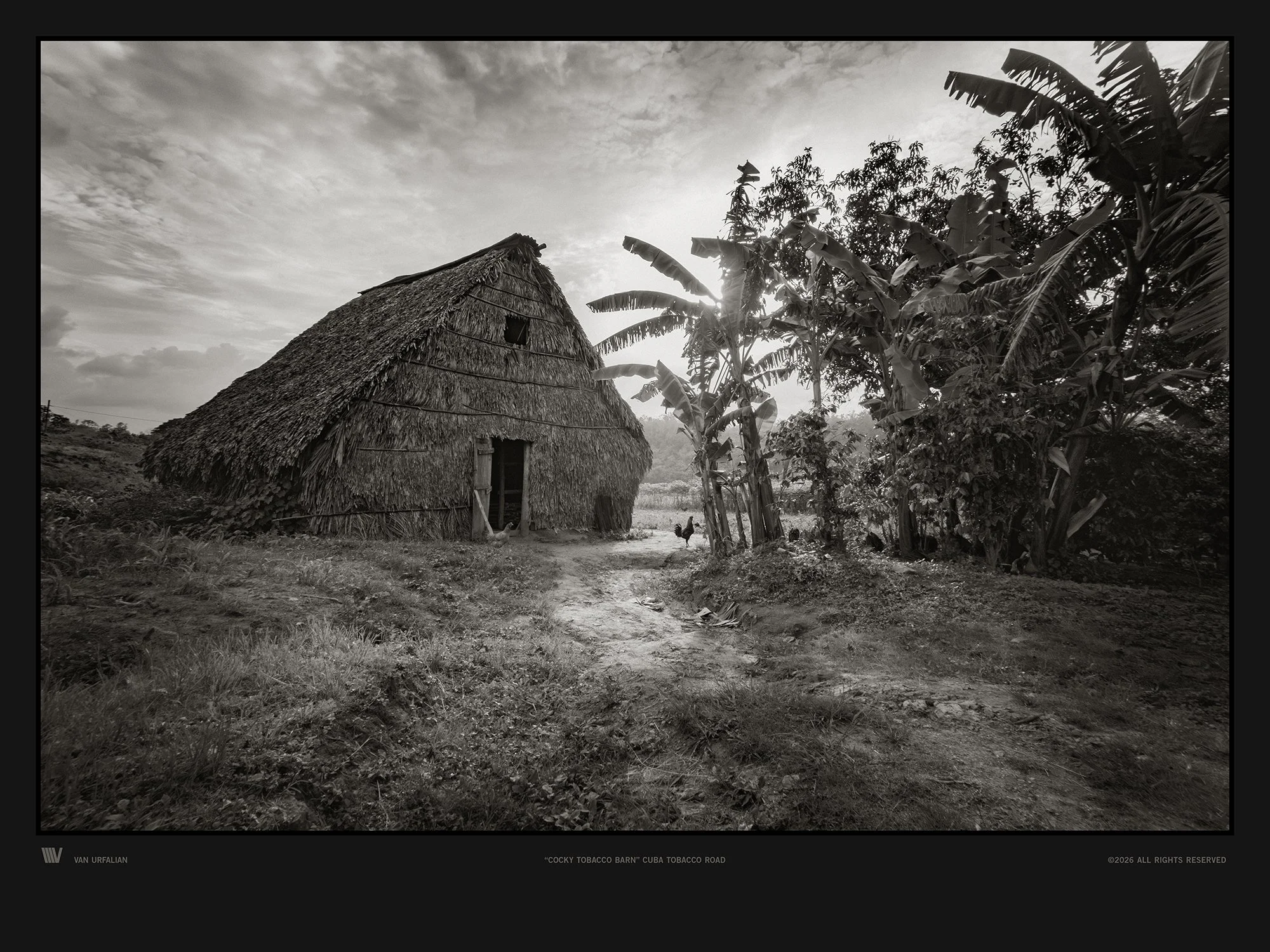
Cocky Tobacco Barn
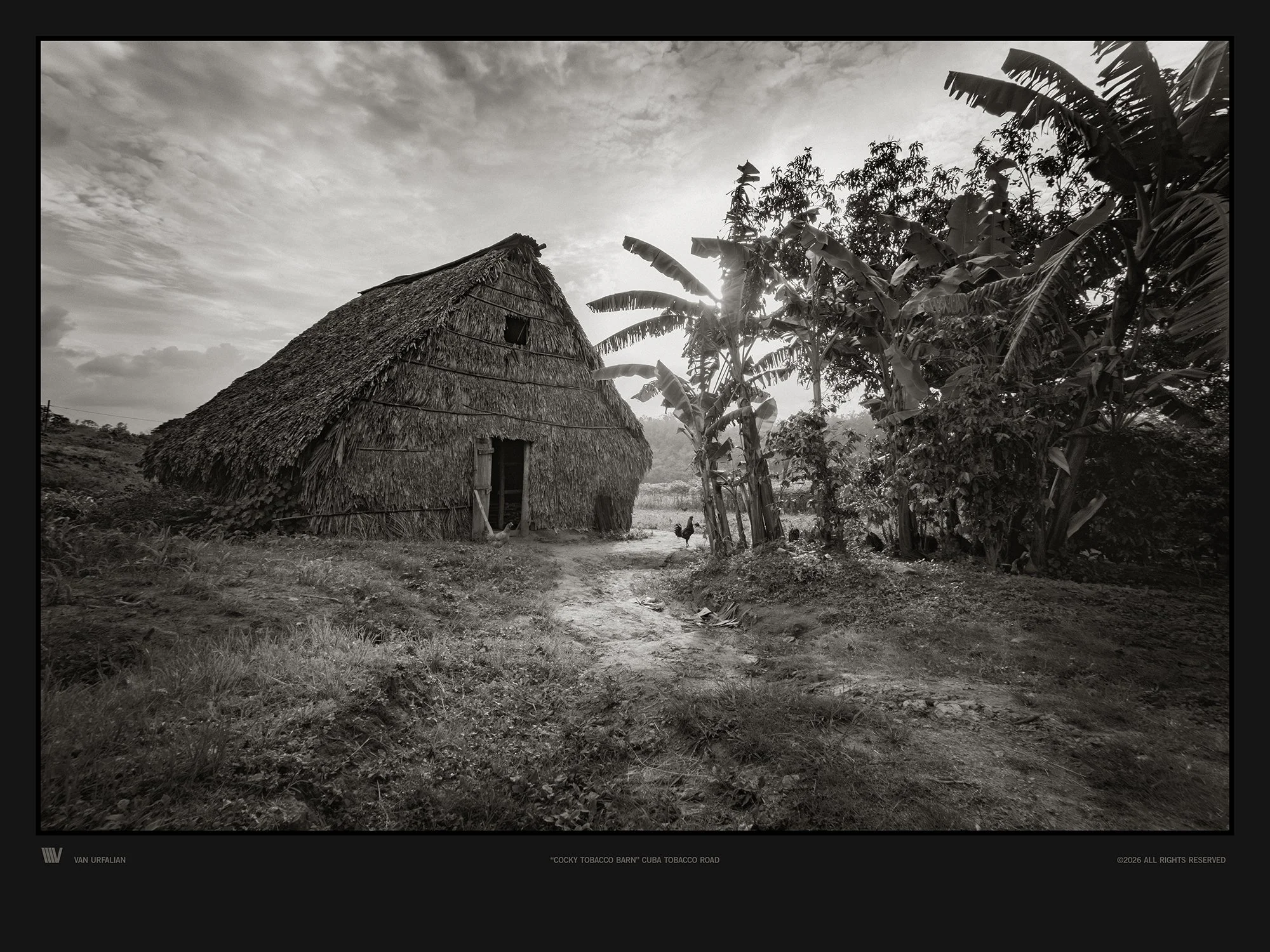
A thatched-roof barn stands among banana trees, chickens and a rooster at the end of a dirt path, the light falling across the ground in front of it. Barns like this are built to breathe: open to the air, so tobacco can dry slowly and evenly under the roof. It is a modest structure, but it holds the heart of the valley's work — the long, quiet stage between a green leaf in the field and a finished cigar.
TITLE: Cocky Tobacco Barn (June, 2015)
MEDIUM: Archival Giclée on canvas
DIMENSIONS: 24 X 16”
PRICE: $3,750
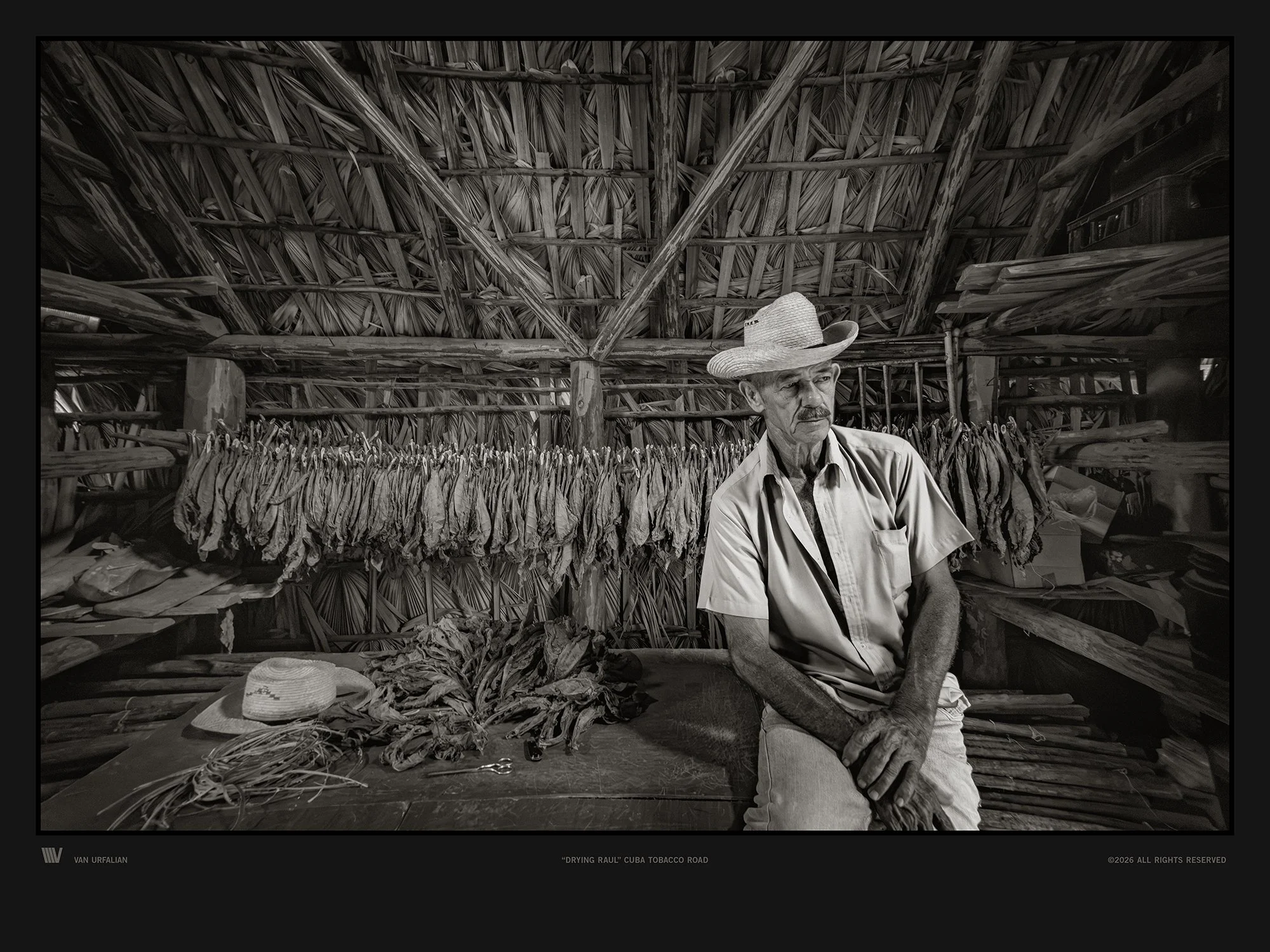
Drying Raul
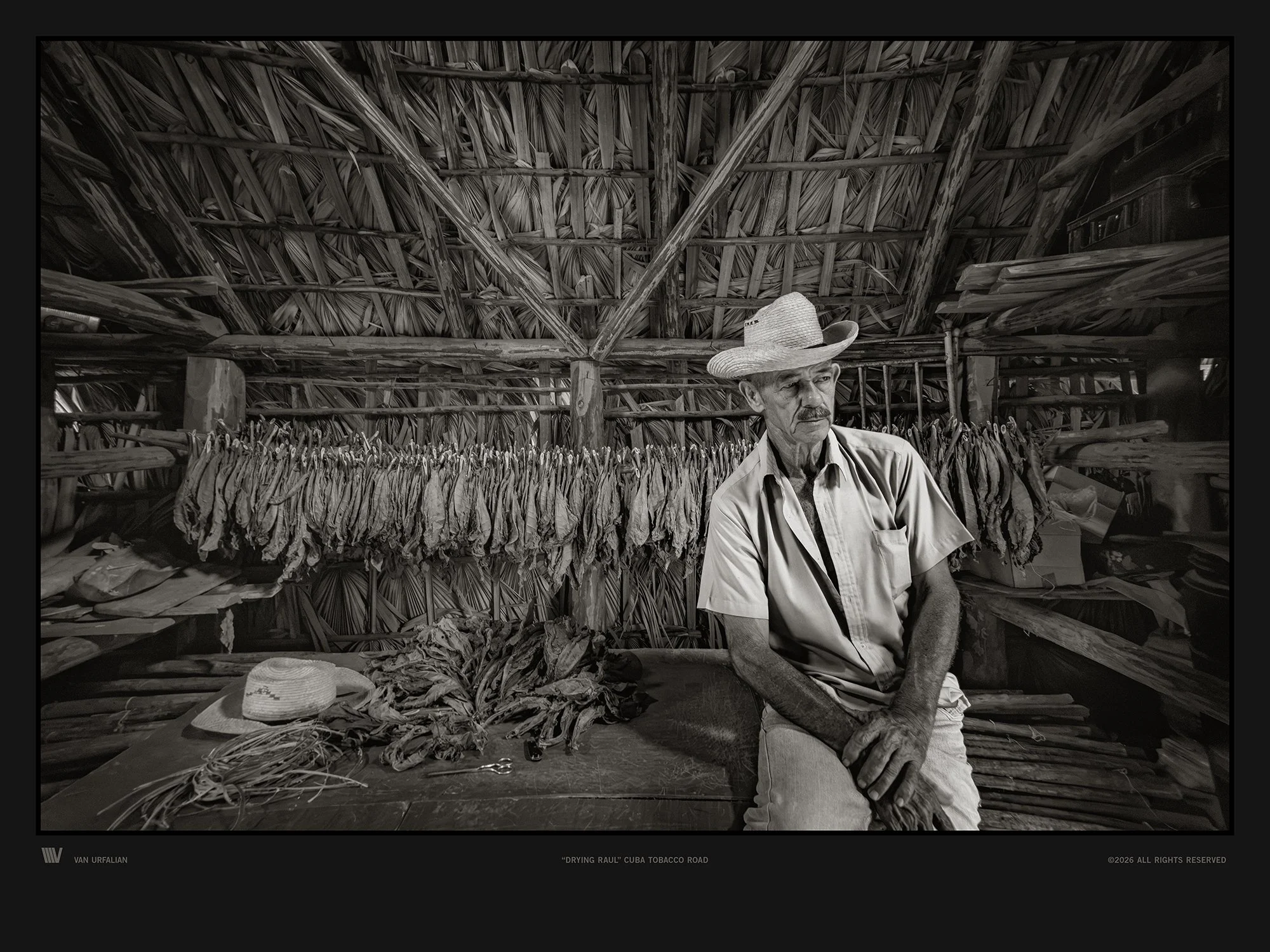
Raul sits in his curing barn among tobacco leaves hung in rows overhead. After harvest, the leaves are tied in bunches, hung from long wooden poles, and left to dry slowly in the open air for a month or more. Under the arrangement long reported by those who grow it, farmers sell most of the crop to the state at a set price and keep a smaller share to sell on their own. It is work done with patience, within terms set elsewhere — and he sits in the middle of it, unhurried, as someone who knows exactly how long it takes.
TITLE: Drying Raul (June, 2015)
MEDIUM: Archival Giclée on canvas
DIMENSIONS: 24 X 16”
PRICE: $3,750
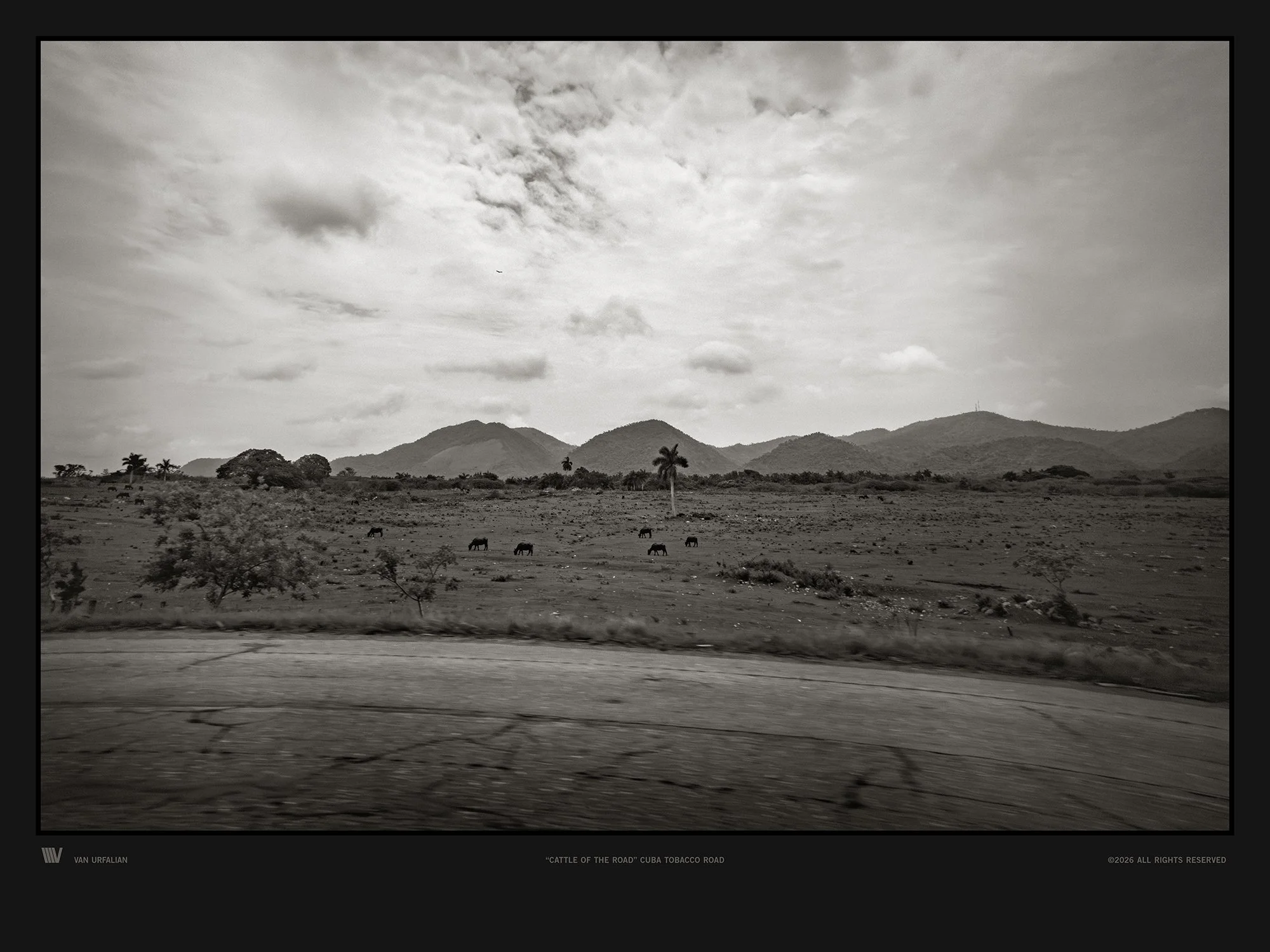
Cattle of the Road
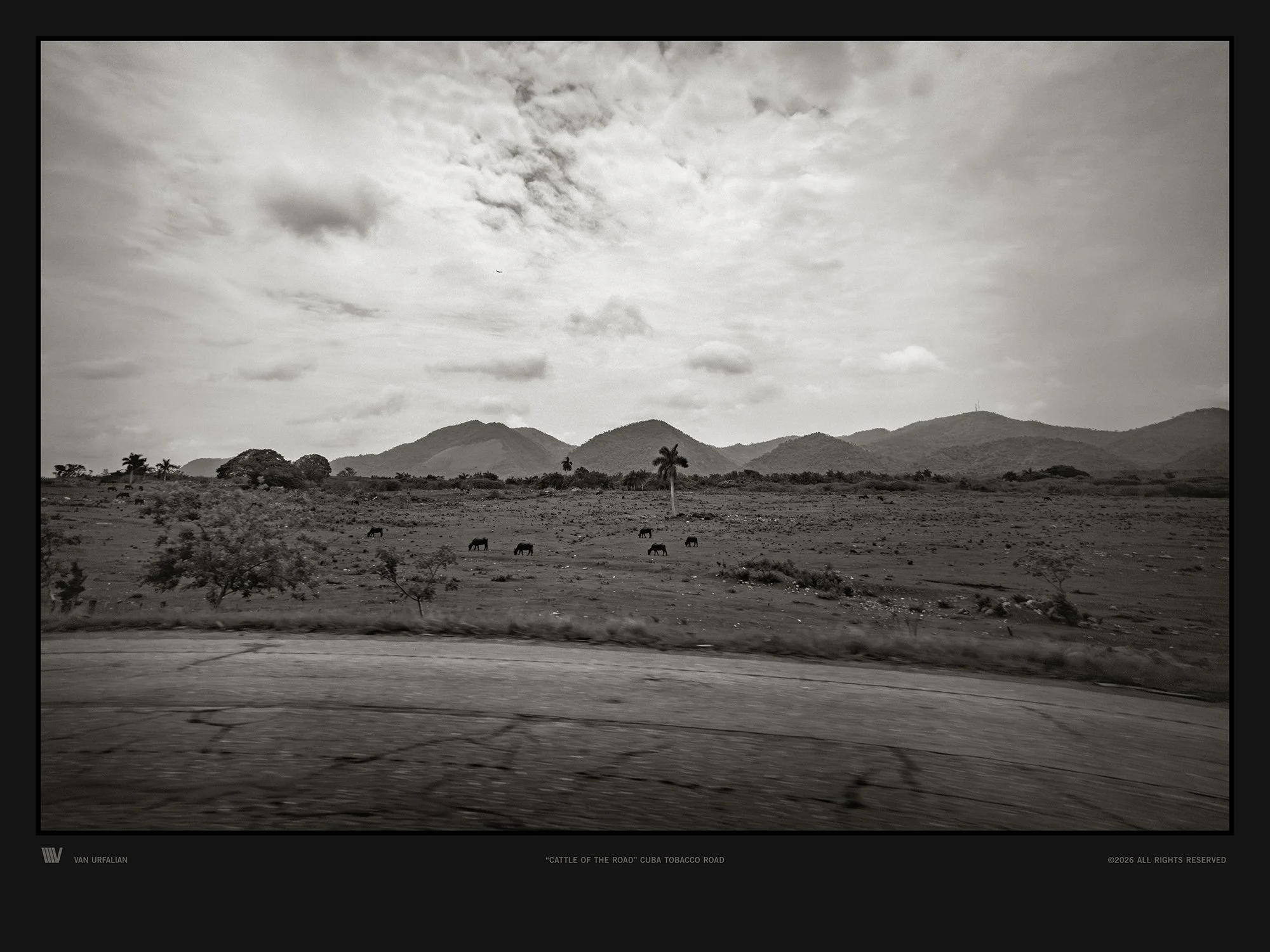
Cattle graze in the distance beside a cracked, curving road with no one on it, beneath a large sky and a low line of mountains. Nothing here is hurried or staged. The road is patched and narrow, the pasture open, and the pace of the day is set by weather and animals rather than schedules — a quiet counterpoint to the pace of the city a few hours east.
TITLE: Cattle of the Road (June, 2015)
MEDIUM: Archival Giclée on canvas
DIMENSIONS: 24 X 16”
PRICE: $3,750
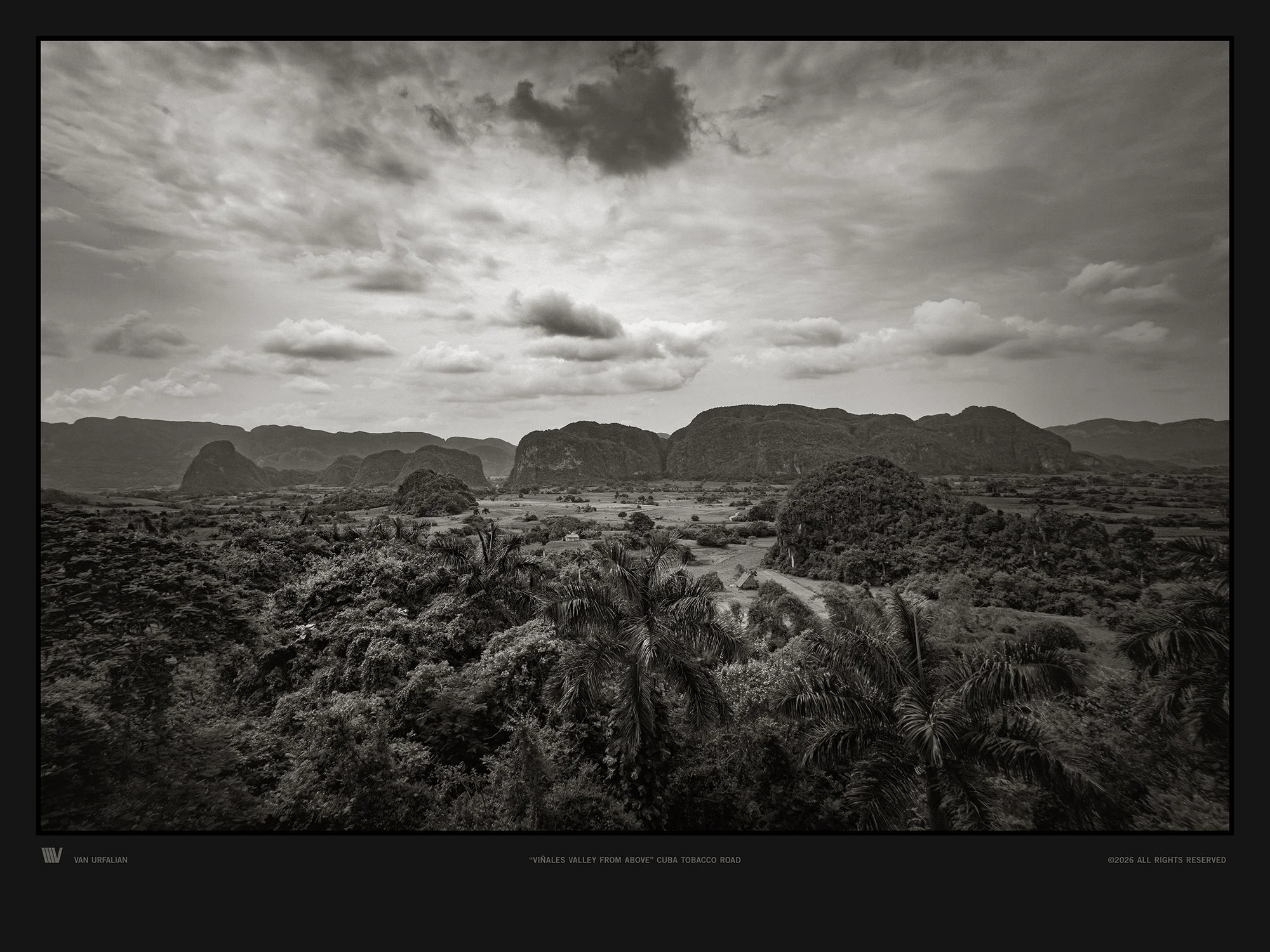
Viñales Valley from Above
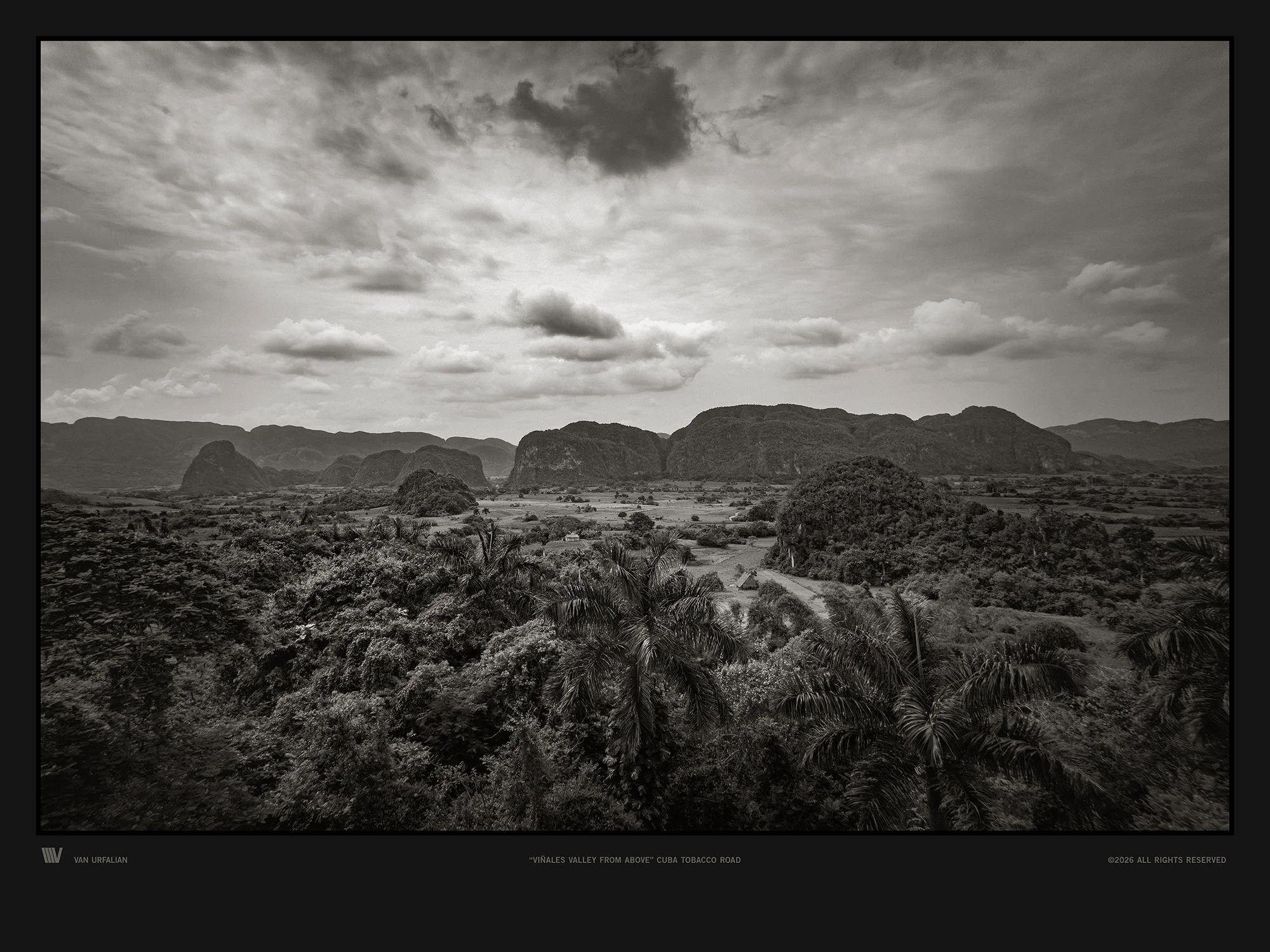
From a height, the valley reads as a single composition — a green floor, palms in the foreground, and mogotes standing like islands. What UNESCO recognized in 1999 was not only the scenery but the way of life within it: a landscape shaped by traditional tobacco farming that has survived largely unchanged for centuries. The land and the people who work it are, in this view, impossible to separate.
TITLE: Viñales Valley from Above (June, 2015)
MEDIUM: Archival Giclée on canvas
DIMENSIONS: 24 X 16”
PRICE: $3,750
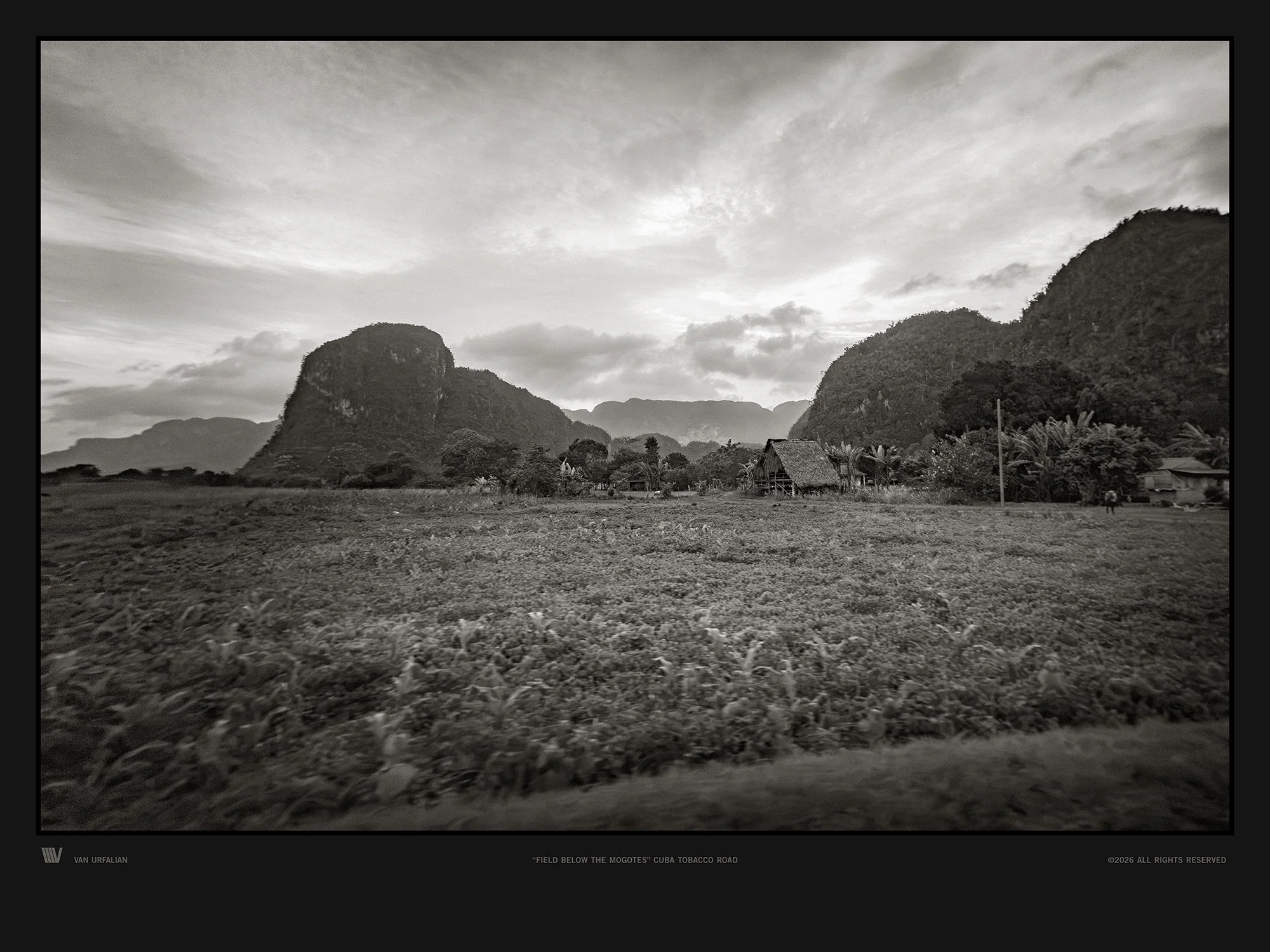
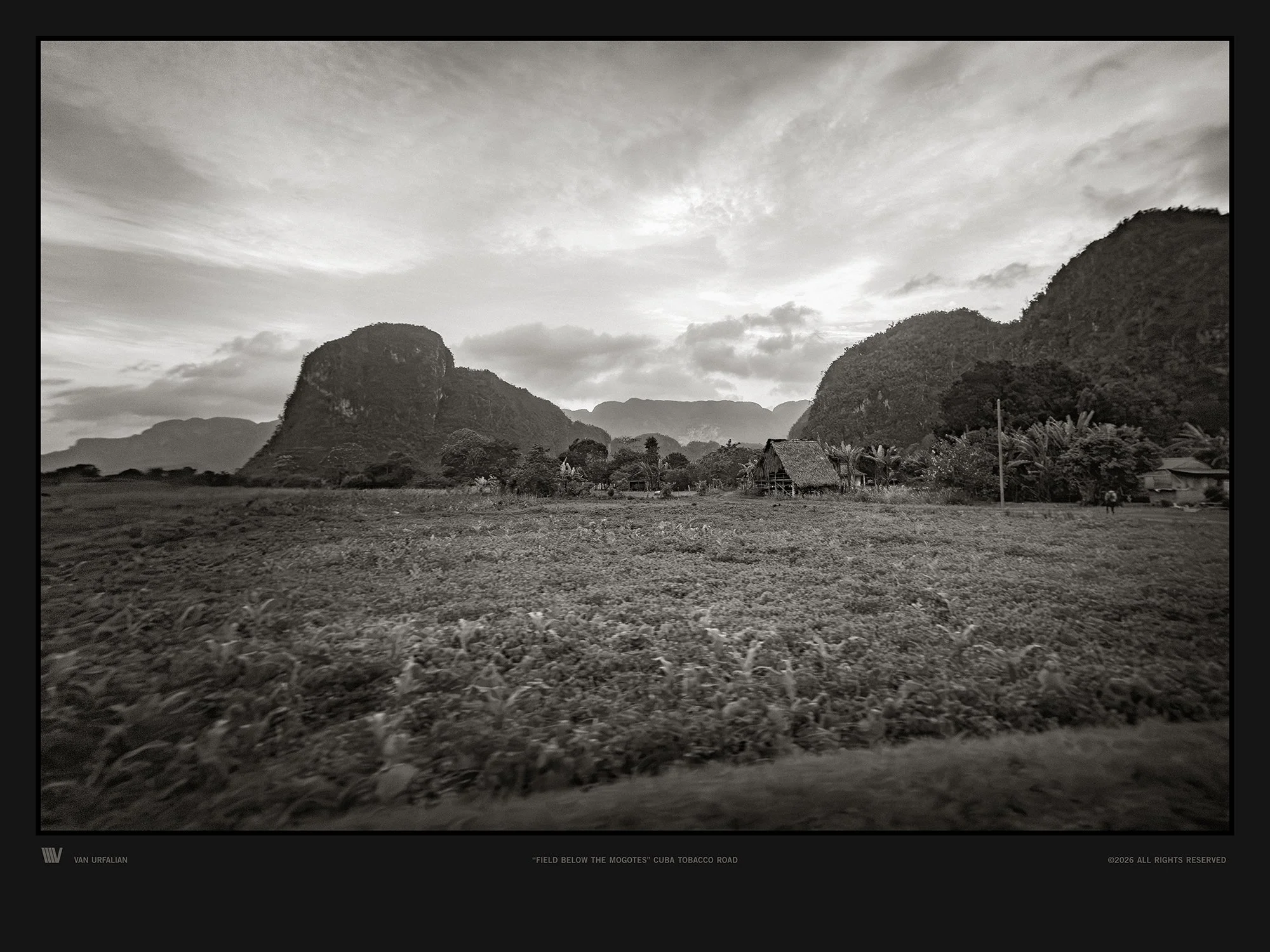
Field Below the Mogotes
Mogotes rise on either side of a wide field, with a single low hut tucked at the edge of the trees. It is a short walk from the plants to the barn, and the whole cycle of the crop happens within sight of the fields: the leaves are harvested, tied in bunches, hung to dry, and sold, much as they have been for generations. The scale of the land is enormous; the scale of the work is a few hands, a few animals, and a lot of patience.
TITLE: Field Below the Mogotes (June, 2015)
MEDIUM: Archival Giclée on canvas
DIMENSIONS: 24 X 16”
PRICE: $3,750
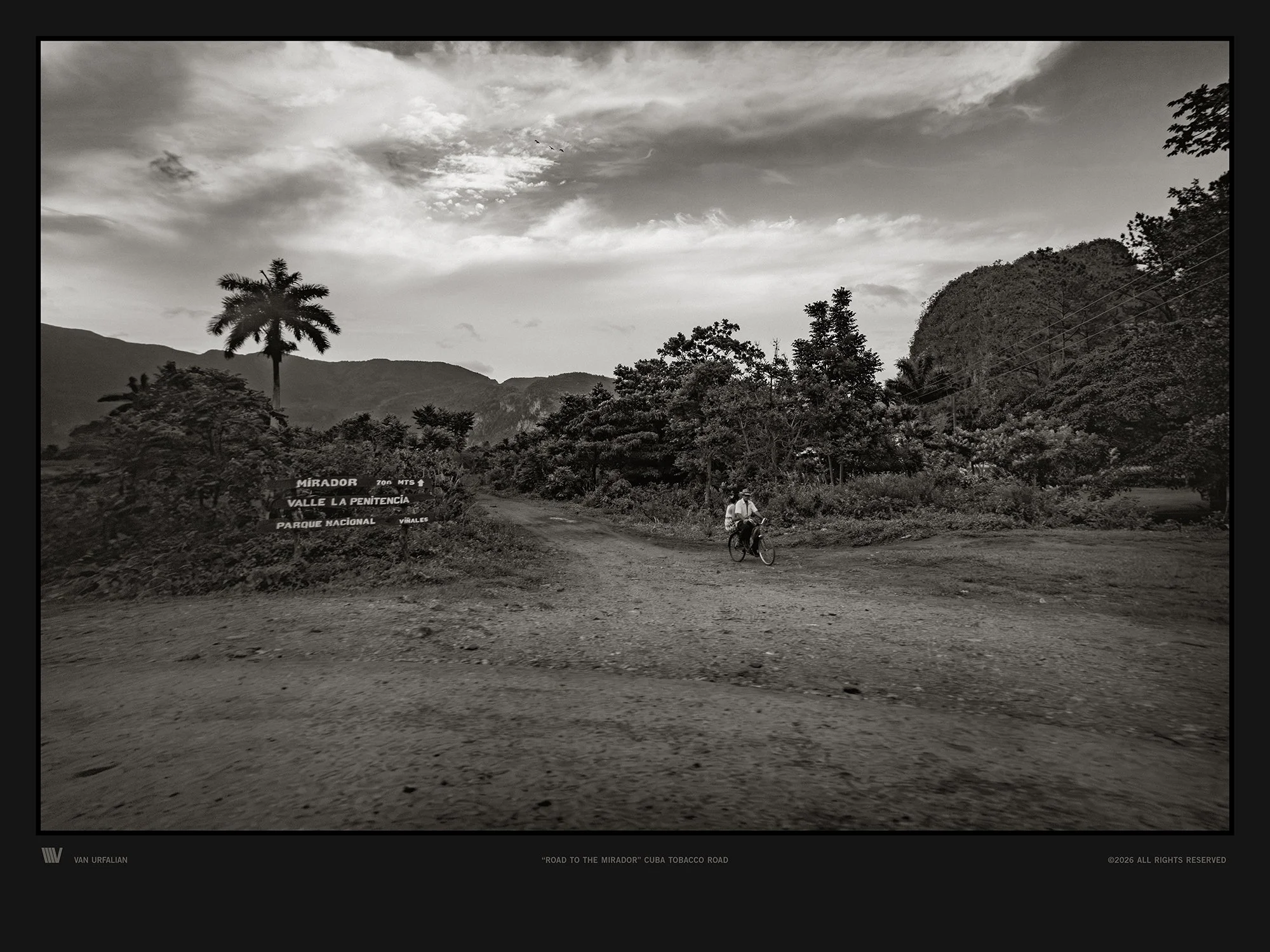
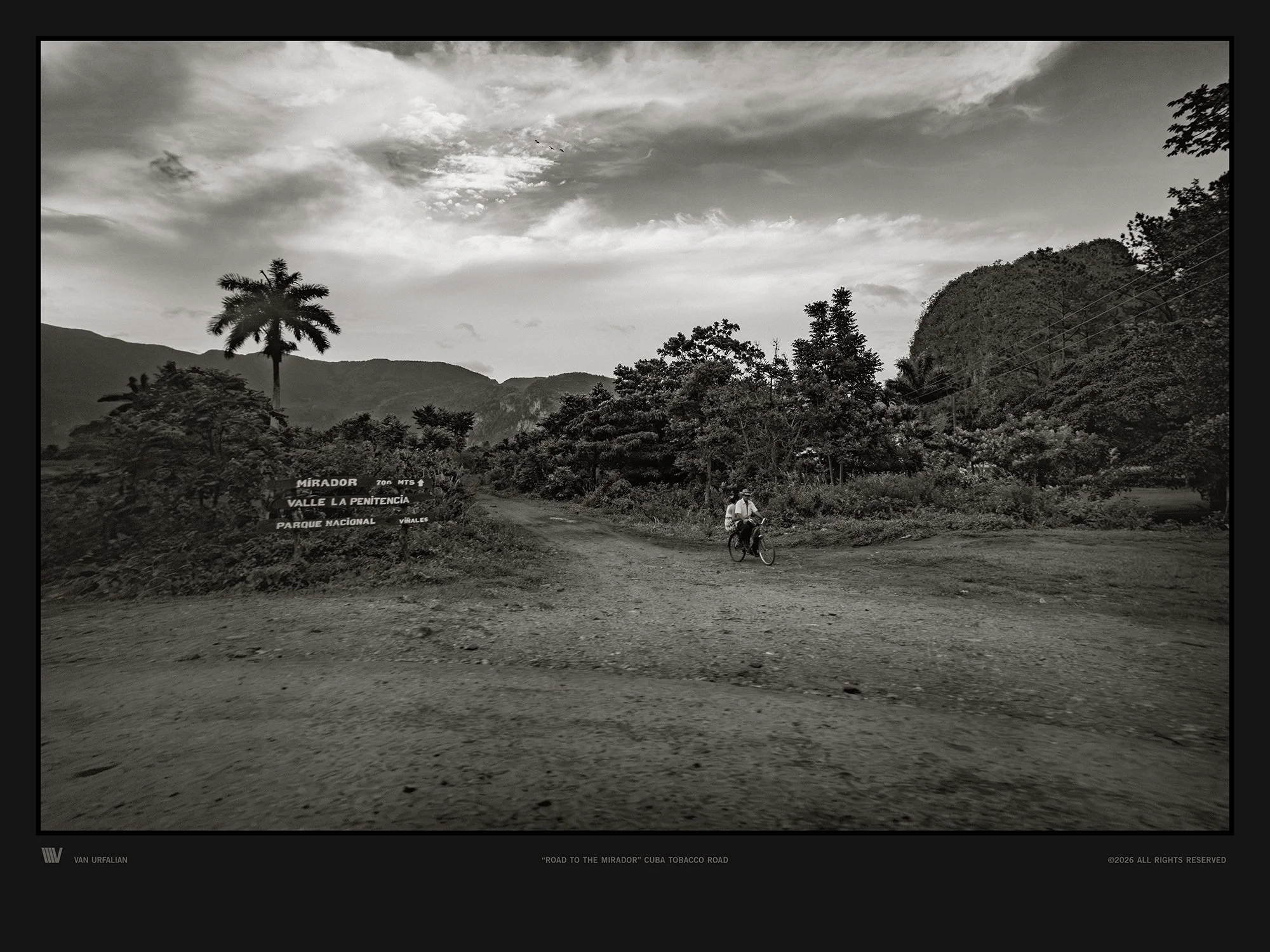
Road to the Mirador
A dirt road bends toward the mogotes, past a painted sign: Mirador, 700 meters ahead; Valle La Penitencia; Parque Nacional Viñales. The couple on a bicycle look small beneath the hills. There is no traffic and no visible hurry. Viñales lies only about two hours from Havana, but the distance feels like more than that — a national park where people still live and farm, and where the pace is set by the season rather than the clock.
TITLE: Road to the Mirador (June, 2015)
MEDIUM: Archival Giclée on canvas
DIMENSIONS: 24 X 16”
PRICE: $3,750
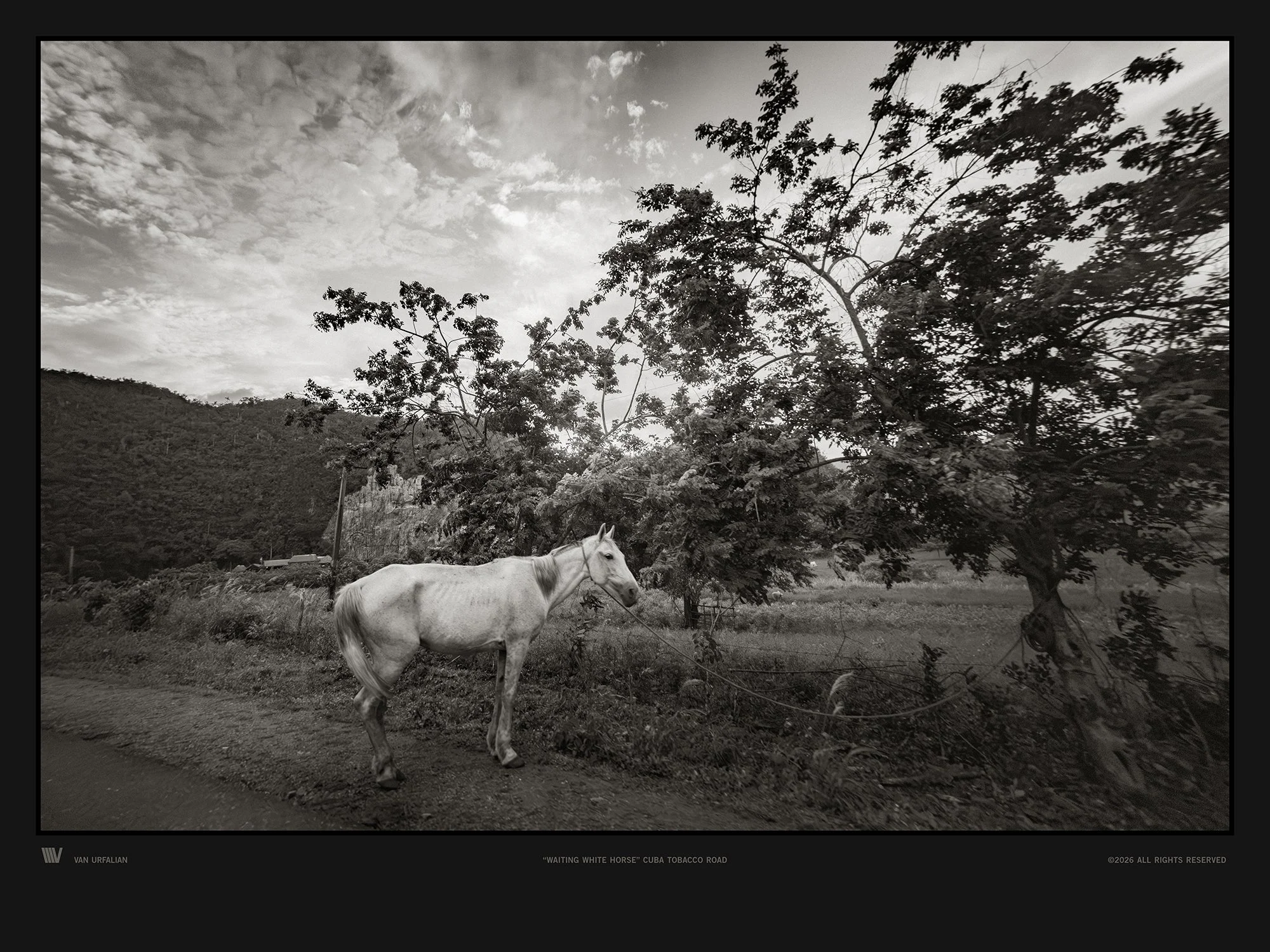
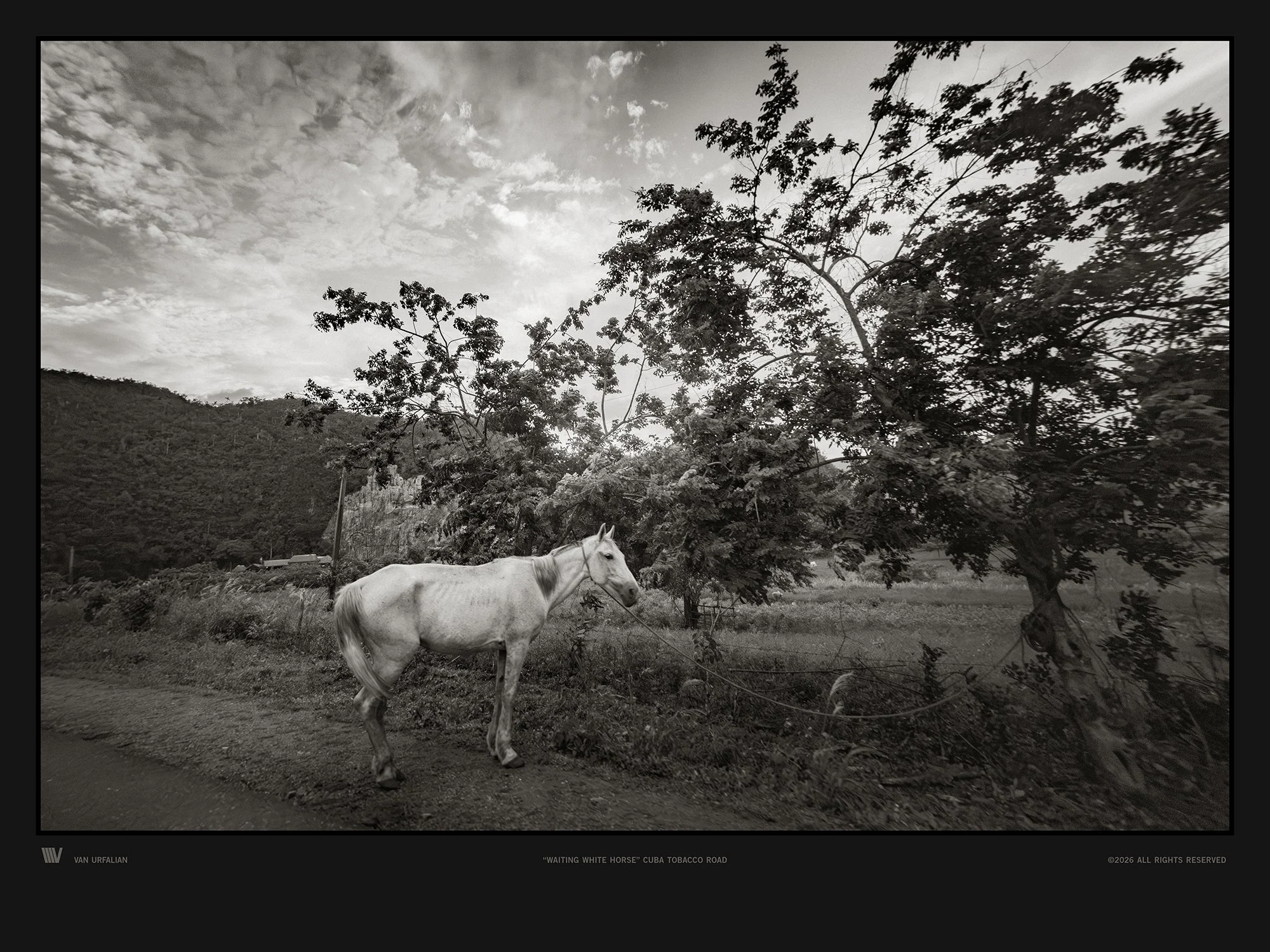
Waiting White Horse
A white horse stands alone beneath a tree at the edge of a field, the mogotes soft on the horizon. In the Viñales Valley, tobacco farming still leans on animal traction, because mechanical cultivation can lower the quality of the leaf. Slowness here is not a handicap but a method — a limit on machinery that has become the standard of the crop.
TITLE: Waiting White Horse (June, 2015)
MEDIUM: Archival Giclée on canvas
DIMENSIONS: 24 X 16”
PRICE: $3,750
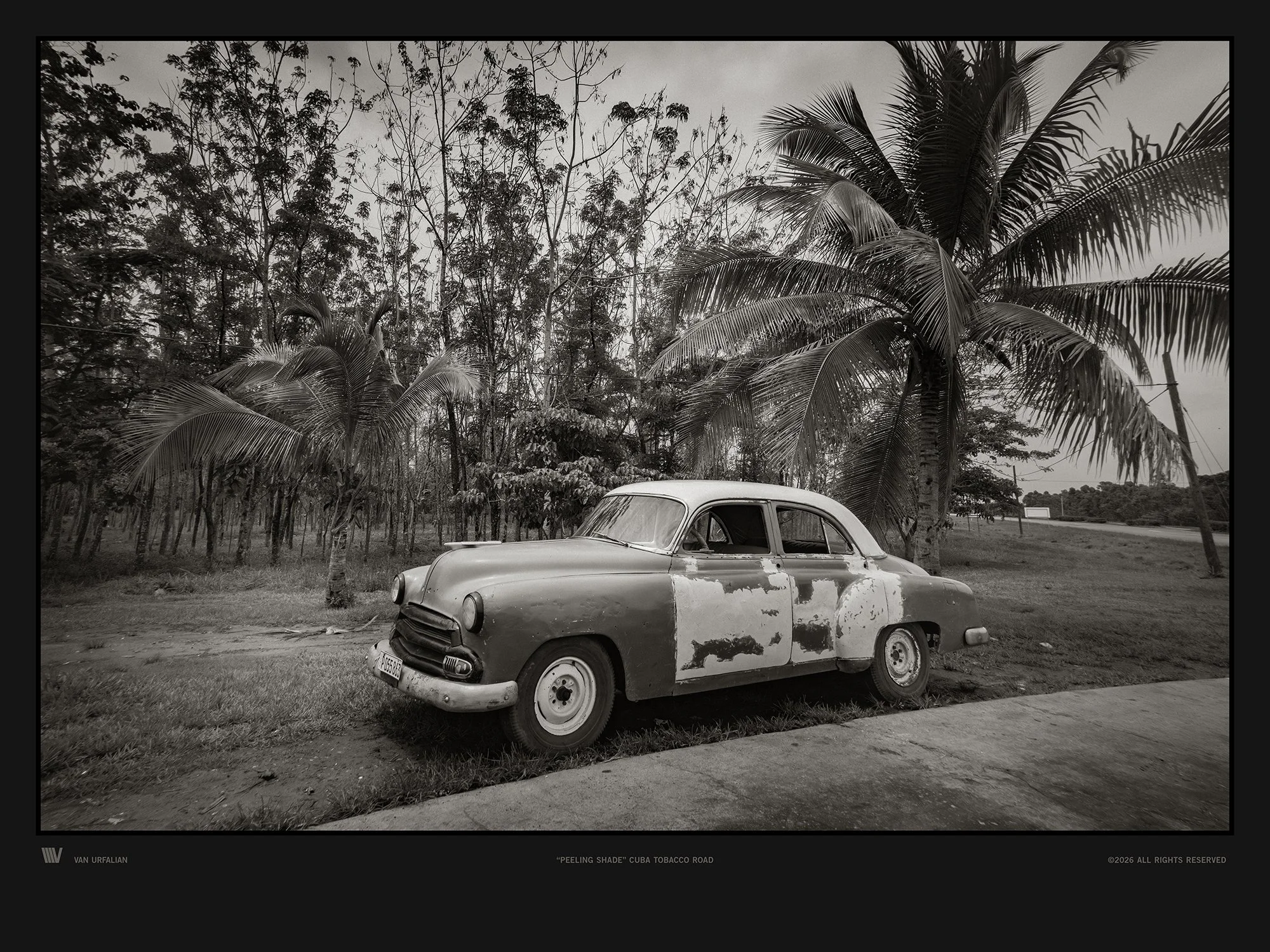
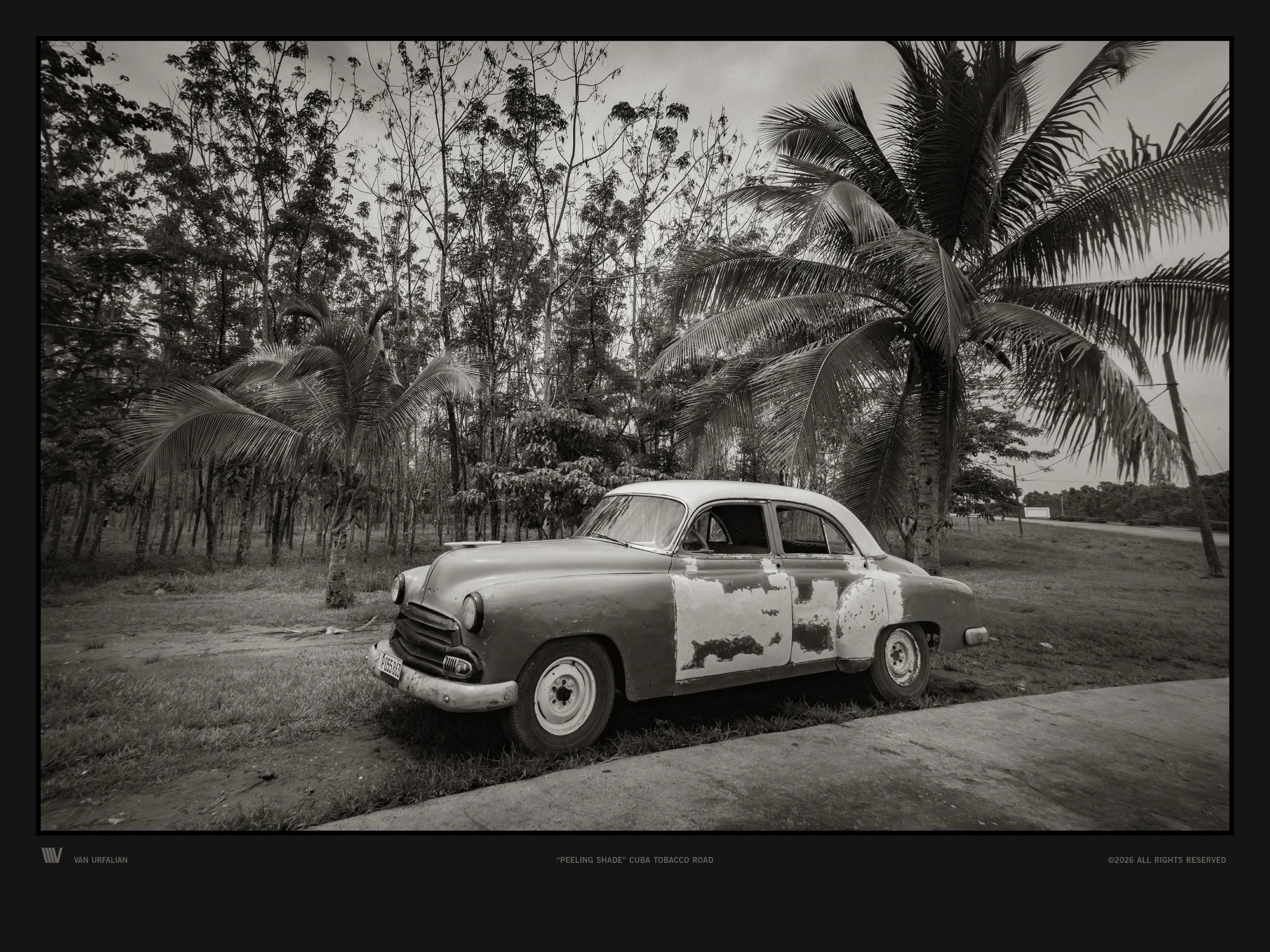
Peeling Shade
An early-1950s Chevrolet sedan rests in the shade of the palms, its paint peeling in broad patches. Cars like this arrived in Cuba before 1959; once imports and spare parts were cut off, their owners kept them running for decades on improvisation and whatever replacement part could be found. Far from the Havana streets where such cars have become a postcard, this one reads less like nostalgia than like a tool — patched, parked beside the fields, and expected to keep working.
TITLE: Peeling Shade (June, 2015)
MEDIUM: Archival Giclée on canvas
DIMENSIONS: 24 X 16”
PRICE: $3,750
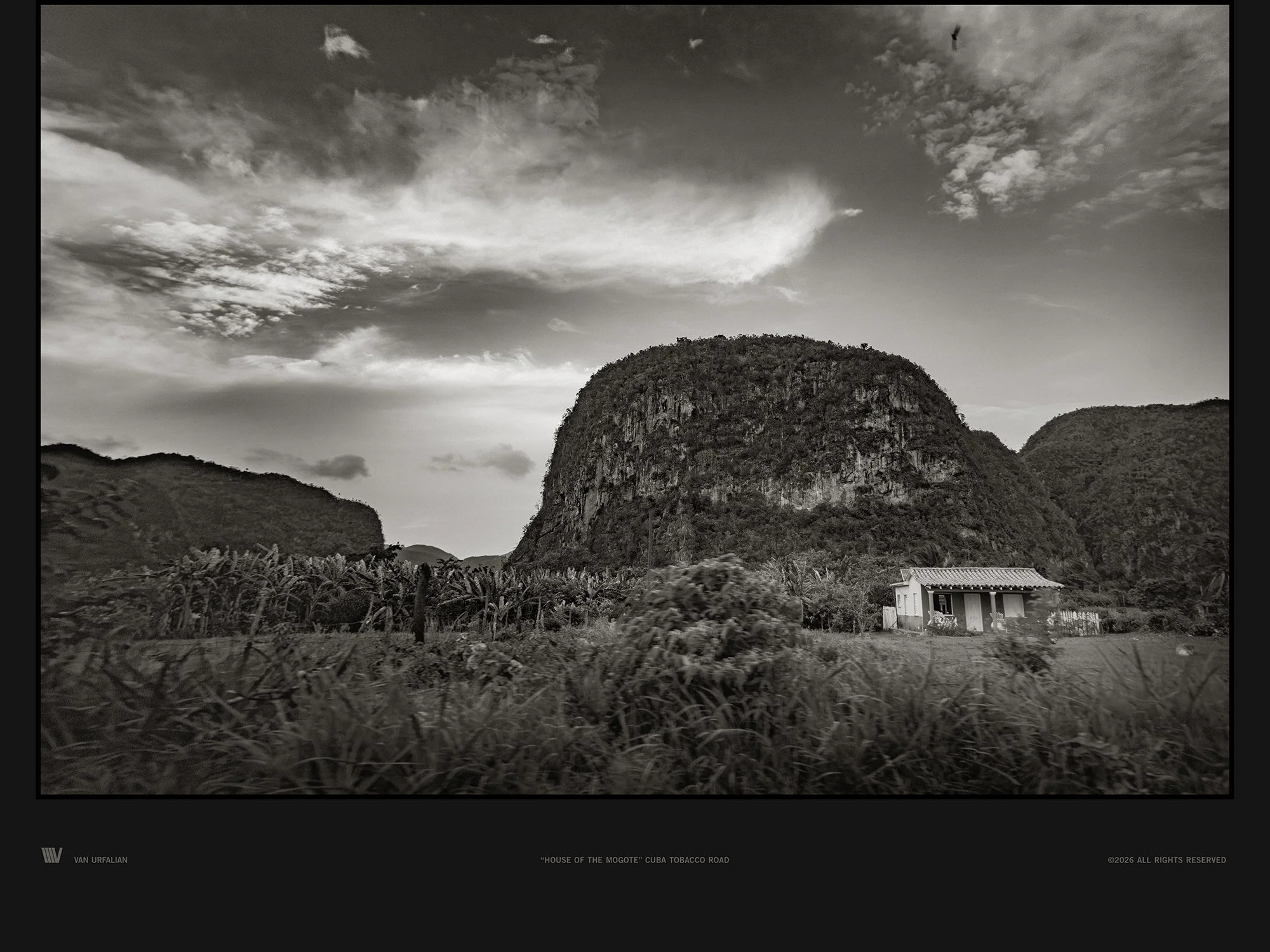
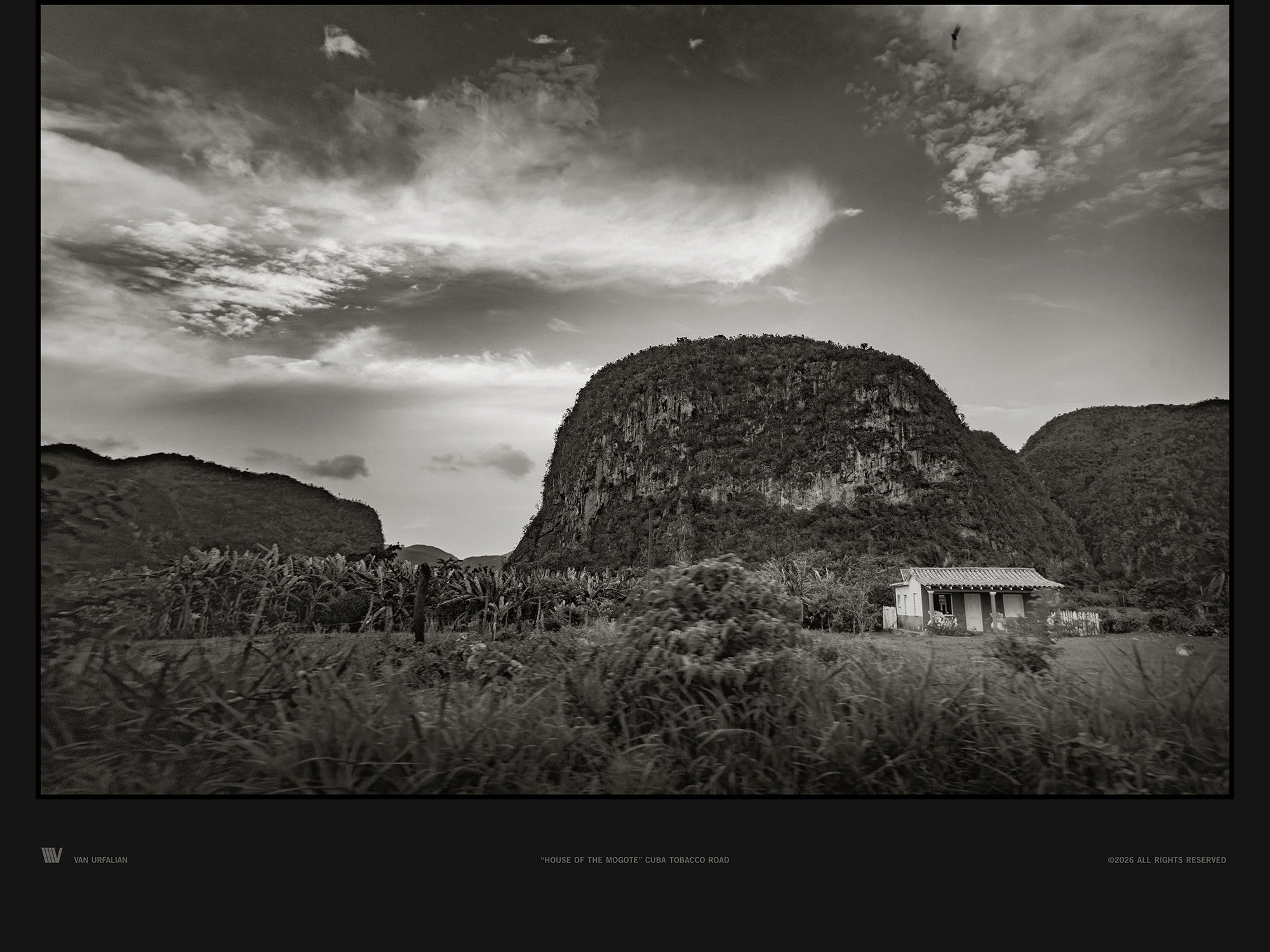
House of the Mogote
A small house sits at the foot of a mogote, dwarfed by a limestone hill that has stood far longer than any farm. Mogotes are among the most distinctive landforms in Cuba: steep, tower-like outcrops of ancient limestone, some rising 300 meters, that hide a network of caves carved by underground rivers. The fields around the house are planted in tobacco, as they have been here for generations. In a landscape this large, the human scale is modest — one house, one field, one family's share of a valley whose farming has endured long enough to earn UNESCO recognition.
TITLE: House of the Mogote (June, 2015)
MEDIUM: Archival Giclée on canvas
DIMENSIONS: 24 X 16”
PRICE: $3,750
Get in touch for availability or scheduling a private visit